Skip to content

Posts tagged ‘clementine’

Sid & The Legend Of Condo Guz

For once I’d like to deviate the attention on this blogsite from The Camerawalls by sharing a piece of documented relevance with answers to the question “Who was Ian Sarabia before The Camerawalls?”

Ian is a music enthusiast who calls San Francisco his home during the duration of his stay in the US to study Film & Art, trying to live a life less ordinary. I don’t recall the reason why he went back to the Philippines, all I can remember is that he used to help manage a family owned bar he named Amoeba (after that record bar in Haight & Ashbury streets) situated in the same spot where Club Dredd in Eastwood Citywalk now operates. He grew tired of the place one night and randomly found his way in a Makati watering hole called Gweilos where Orange & Lemons regularly perform. We met and it wasn’t love at first sight… he just loved what he heard and the original music we performed, a breather from his distaste for popular OPM he simply cannot relate with. That was 2004. So from then on he continued to patronize my old band till we became best buddies. He goes by the name Bryan.

Ian & Clementine after an O&L gig. (August 18, 2004)

Bryan and Clem after an O&L gig at Gweilos Bar (August 18, 2004)

We shared the same level of passion for music particularly with Britpop. We often hang out at his place getting intoxicated with alcohol and Beatles records/videos/documentaries (among others) and endless talks about music, life and love. He introduced me to the music of The Stone Roses, one of his musical icons and to Vodka, his daily nourishment. I was amused with his idealism and free-thinkin’-not-a-care-in-the-world attitude and his love for Madchester.

Bryan appears to be a Pinoy version of Ian Brown especially when he is in the zone while the baggy beats is on air and alcohol is kicking in. We even call him “Monkey Boy” for that near perfect display of ‘Mank Attitude.’ This amusement made me want to form a band for Bryan.

Enthused with the idea we embarked on a search for proper band mates ending up with a who’s who line up of musicians to back him up like Boom Jose of Violent Playground, Dylan Vizcarra (NU 107 DJ/Jack TV Host), Jerome Velasco of The Teeth/Daydream Cycle and KT Dela Cruz. And the following year CONDO GUZ was born with reference to endless nights lazing in his condo unit.  Accordingly, Bryan christened himself with a new name to suit his ultra cool, rock and roll imaging. From then on he was known as SID.

condoguz

Condo Guz (from L-R: Boom, KT, Dylan, Nick, and Sid)

I have no idea how they pulled it off since things started getting busy and crazy with O&L promoting a new album, Sid and I hardly had time to catch up. And one night our music coincide with both of us playing in the same venue. His band and mine on the 9th of November 2005 performing baggy music no one dares to. And yeah, we were greatly entertained. Watch the video below of Condo Guz performing an excellent cover of a  Stone Roses tune called “She Bangs The Drums.”

Little do we know that the two of us will eventually end up as bandmates after 4 years of friendship bringing everything to another level. However uncertain I am on how Condo Guz came to an end, or how inexperienced Sid is behind the drumkit. I have every reason to follow my instincts of offering him a proper career as a musician. Friendship, passion, strong values and principles  — key ingredients for a lasting relationship as a band.

Many scorned at the idea. Some even called me desperate. I was approached by a number of seasoned musician with tempting offers. I just shrugged it off and patiently went on and christened him with a new name which is a duck soup to pronounce but spells two of the most influential music icons (Joy Division and The Stone Roses)  — IAN.

Now tell me, did I made the right choice? Oh, yes I did… since day one. 

– Clementine
Repost: Power Of Pop Interview

Reposted from Power Of Pop website. View original post Here.
Interview by Rebecca Lincoln. Answers by Clementine. Photo by Charles Buenconsejo.

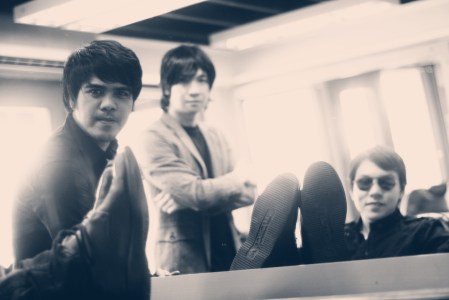
The Camerawalls (photography by Charles Buenconsejo)

The Camerawalls (from L-R: Law Santiago, Clementine, Ian Sarabia)

Who are The Camerawalls and how was it formed?

The band comprises of Ian Sarabia, Law Santiago and myself. It was formed after my stint with Orange & Lemons (a short lived local pop sensation), with an ardent desire to channel whatever creative juices left in my system with the help of two long time friends and aficionados back in 2007.

Who are the influences for The Camerawalls?

Our obvious influences include The Beatles, The Smiths and various guitar pop bands from the 80s and 90s.

What’s the dynamics of the band?

Ian occasionally co-writes and shares eureka moments with me but spends more time behind the drum kit. Law is our silent lucid bassist. I’m the melody maker and chief songwriter of The Camerawalls. I do vocal duties and perform the following instruments on our recordings: acoustic/electric guitars, the indigenous octavina and banduria.

Why do you play music?

Aside from the usual rationale like money and fame, we play music as a creative outlet to give a home to our songs, including exciting ideas and musical prospects. Performing also refines our act and gives us a lot of contacts. We see it as a profession but at the end of the day, we do it because it’s fun. Our music will eventually stagnate if we do not play it. Personally, I do this as a legacy. When you’re worn out and old, it’s nice to look back 20 or 30 years knowing you did something special, if not great.

Your previous album, “Pocket Guide To The Other World,” released in July 2008, was well received in the Philippines. Any plans to record another album? And if there were plans, any idea what it would sound like? Would it be very different from “Pocket Guide To The Other World,”?

We just recorded two new songs intended for a compilation album under Lilystars Records, my indie record label, entitled “The Sight of Love” and “Longevity.” It’s just a matter of time before we release it, maybe before Christmas when everything gets back to normal after a couple of deadly typhoons, which placed the Philippines under a state of calamity. A new full-length album is also in the works come 2010. It’s not a habit of mine to repeat what I did from previous works, so it’s safe to say that the sound would definitely evolve.

What was involved in the recording process for the album?

Normally, the lyrics come first. It’s much easier to put proper dynamics, melody and arrangement to a song when you already know what you will be singing about.

What was the lyrical process for making the album?

For “Pocket Guide To The Otherworld,” the lyrics are very personal. It was mostly related to current experiences and sentiments during the times we were developing the album and the band. Some of the lyrics hide facts behind profound words while others portray real emotions. We try to be real as much as we can and challenge ourselves in the process.

How much has changed since the album was released?

A lot has changed. We are happier now, more confident and very open to different musical stylings. We are still promoting the debut album and doing a lot of small gigs. Being indie gives us limited exposure and attention. A lot of people haven’t heard of us yet and we try to reach out to as many people as we can. And we hope this Power of Pop interview will make a difference. 🙂

Do you have any plans to play in Singapore?

We were once invited to play in Esplanade by a local promoter from the Philippines a few months ago but our bassist encountered problems with his passport so we were regretfully unable to make it. Given another opportunity, we won’t say no to playing in Singapore or the neighboring Asian countries.

What’s the future plans for The Camerawalls?

Our long-term plan would be to release and record 10 albums. 1 down, 9 to go. We also want to perform in at least 20% of the total number of countries in the world. There are more or less 195 countries in the world, which gives us a figure of around 40 countries. 1 down, 39 to go. 🙂

John Lennon – In Memoriam

October 9, 1940  – marks the emergence of a baby that is destined to be a rock icon. One of the best things that ever happened in the music industry in general, and one of the most influential household name – John Lennon. In some photos and angle, kids nowadays might mistake him for Harry Potter, but no, he is more than magical, he is real and a  legend in his own right. For green music fans, read on.

“My role in society, or any artist’s or poet’s role, is to try and express what we all feel. Not to tell people how to feel. Not as a preacher, not as a leader, but as a reflection of us all.” – John Lennon

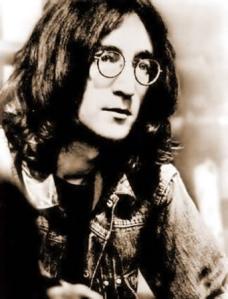
John Lennon (1940 - 1980)

John Lennon (1940 - 1980)

John Winston Ono Lennon, MBE (9 October 1940 – 8 December 1980) was an English rock musician, singer-songwriter, author, and peace activist who gained worldwide fame as one of the founding members of The Beatles. With Paul McCartney, Lennon formed one of the most influential and successful songwriting partnerships of the 20th century and “wrote some of the most popular music in rock and roll history”. He is ranked the second most successful songwriter in UK singles chart history after McCartney.

Lennon revealed a rebellious nature, and biting wit, in his music, on film, in books, and at press conferences and interviews. He was controversial through his work as a peace activist and visual artist. After The Beatles, Lennon enjoyed a successful solo career with such acclaimed albums as John Lennon/Plastic Ono Band and Imagine and iconic songs such as “Give Peace a Chance” and “Imagine“. After a self-imposed “retirement” to raise his son Sean, Lennon reemerged with a comeback album, Double Fantasy, but was murdered less than one month after its release. The album would go on to win the 1981 Grammy Award for Album of the Year.

In 2002, respondents to a BBC poll on the 100 Greatest Britons voted Lennon eighth. In 2004, Rolling Stone magazine ranked Lennon number 38 on its list of “The Immortals: The Fifty Greatest Artists of All Time” (The Beatles being number one). He was also ranked fifth greatest singer of all time by Rolling Stone in 2008. He was posthumously inducted into both the Songwriters Hall of Fame in 1987 and the Rock and Roll Hall of Fame in 1994. (source: wikipedia)

“I’m not going to change the way I look or the way I feel to conform to anything. I’ve always been a freak. So I’ve been a freak all my life and I have to live with that, you know. I’m one of those people.” – John Lennon

I have been jokingly and seriously (sometimes with hate) regarded many times as Lennon’s Filipino look-and-sound-a-like, from physical features to vocal attack. However they meant it,  will be taken as an ultimate compliment from a provincial commoner. More than a decade of emulation and admiration spells the reason why.

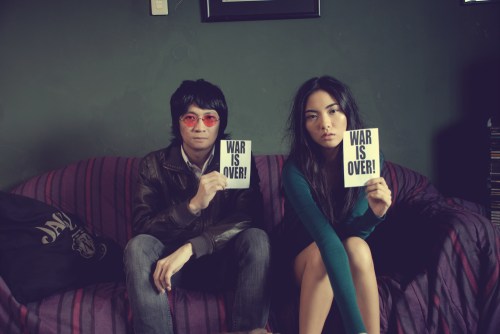
Last year, for a Christmas eve fashion feature in the lifestyle section of The Manila Bulletin, I was invited to do a John Lennon-Yoko Ono inspired photo shoot and pose as the rock icon entitled “And So This Is Christmas.” Here are some of the pics taken by Charles Buenconsejo:

Clementine & Ana Sideco

Ana Sideco & Clementine posing as John & Yoko. Appeared December 24, 2008 on the lifestyle section of The Manila Bulletin. Photography by Charles Buenconsejo. Styling by Liz Anne Bautista. Location: Wombworks Studio.

My favorite shot.

My favorite shot. Barefooted moments.

War Is Over!

War Is Over!

Love Is All We Need

Love Is All We Need.

“You are all geniuses, and you are all beautiful. You don’t need anyone to tell you who you are. You are what you are. Get out there and get peace, think peace, live peace, and breathe peace, and you’ll get it as soon as you like.” – John Lennon

That same month prior to the shoot I was given another perfect opportunity to pay tribute to Lennon’s work and perform alongside excellent musicians at a legendary venue for rock music – 70s Bistro. The bar owners organized a Lennon Night with Johnoy Danao (vox/acoustic), Julianne (vox/acoustic), Kakoy Legazpi (lead guitars), Rommel Dela Cruz (bass), Carlo Gaa (keyboards) and Benjie Santos (drums). Was lucky enough to be able to sing for the first time Lennon songs I never thought I’d sing and perform live.

Here are some captured clips covering his songs:

“Woman” from his last  album Double Fantasy (1980)

“Mind Games”  from the album of the same title released 1973

Now I’m with The Camerawalls, his songs especially those with The Beatles, are still a staple choice to cover during gigs. Although he is long gone, he has left a lot to enable everyone to re-imagine his glory days and reminisce what he meant to people he has touched — in ways big and small. – Clementine

“Imagine” from John Lennon’s second solo album of the same title. (1971)

“I believe in everything until it’s disproved. So I believe in fairies, the myths, dragons. It all exists, even if it’s in your mind. Who’s to say that dreams and nightmares aren’t as real as the here and now?” – John Lennon

The Use Of Rondalla Instruments

Incorporating Rondalla instruments on records has been a trademark of mine for quite sometime now. Very evident in the last two records I arranged and co-produced: Orange & Lemon’s last album “Moonlane Gardens” and The Camerawalls debut “Pocket Guide To The Otherword.” From time to time I receive quite interesting feedbacks and inquiries about it. So I decided to apprise everyone with some historical and relevant information.

What is a Rondalla? A quick search from wisegeek.com gave me this:

—–

The Banduria (sourse: reflectionsofasia.com)

The Banduria (source: reflectionsofasia.com)

A rondalla is an ensemble of plectrum instruments, stringed instruments played with a plectrum or pick. It originated in Spain, but became one of the traditional forms of Philippine folk music after its introduction to the islands in the 19th century. Philippine rondalla instruments are made of native Philippine wood and played with a tortoise-shell plectrum.

The word rondalla is from the Spanish ronda, meaning “serenade.” The core instruments of a Spanish rondalla are the guitar, the mandolin, and the lute. The musicians are accompanied by at least one singer, and sometimes also by handheld percussion instruments. Though the ensemble of stringed instruments existed in some form in Spain since at least the 16th century, the rondalla dates from the early 19th century. It soon thereafter traveled to the Philippines, at the time a Spanish colony.

The major Philippine rondalla instruments are the banduria, the guitar, the octavina, the laud, and the bass guitar or double bass. The banduria is the central instrument of the ensemble and, along with the octavina and laud, unique to the Philippines. The guitar and double bass each have six strings, while all other rondalla instruments have 14 strings grouped into six tuning units to produce a richer sound.

The Octavina (source: relectionsofasia.com)

The Octavina (source: relectionsofasia.com)

An eight-piece rondalla should have four bandurias and one of each of the guitar, octavina, laud, and double bass. Many rondallas are quite large, with 30 or 40 members, especially for important social events. A 30-piece rondalla has 16 bandurias, three piccolo bandurias, three guitars, three octavinas, three lauds, two double basses. The number and type of percussion instruments is optional for any size rondalla.

——

My father has been a Rondalla instructor since 1965. It is no wonder why I’m fascinated with the instruments especially my intent on its application on contemporary music. I grew up tagging along with him and experiencing at a very early age the aesthetics to appreciate such, listening to Philippine folk songs and kundiman (serenades) arranged for a Rondalla ensemble. I took a certain liking for the Octavina. It gives out a rich mellow sound comparable to the effect of the Cello in a string quartet, apparent in the instrumental section of our single “Clinically Dead For 16 Hours.”

Other songs in Pocket Guide To The Otherworld where i threw in some octavina and banduria sections includes the following from subtle to the obvious:

1. Markers Of Beautiful Memories – a single high note tremolo attack of the banduria towards the end of each chorus.

2. I Love You Natalie – a simple banduria instrumental sequence followed by a clean electric guitar solo.

3. Canto De Maria Clara – the most relevant piece for a rondalla arrangement would be none other than a poem from our National Hero – Dr. Jose Rizal. The combination of banduria and octavina gives a very rich texture to the song with a vintage and patriotic feel over acoustic guitar jangles.

4. Lizards Hiding Under Rock – a perfect example of how powerful and effective the banduria is with call and answer solos over a semi rock tune.

To listen to the songs visit our MySpace account. Enjoy!  –  Clementine

Doing The Jam

We’ve been playing “To Be Someone” and “That’s Entertainment” for quite sometime now during gigs using an acoustic guitar. When the opportunity for a tribute night presented itself, it was time once again to brush off the dust my electric guitar is collecting.

But first, little backgrounder.

———-

Jam_pic

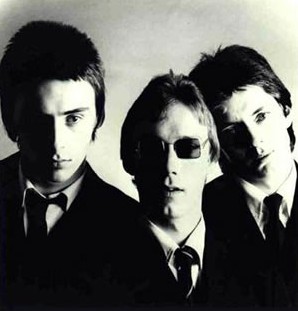
The Jam (from left to right: Paul Weller, Rick Buckler, and Bruce Foxton)

The Jam were an English rock band active during the late 1970s and early 1980s. While they shared the “angry young men” outlook and fast tempos of their punk rock contemporaries, The Jam wore neatly tailored suits rather than ripped clothes and incorporated a number of mainstream 1960s rock influences rather than rejecting them, placing The Jam at the forefront of the mod revival movement.

They had eighteen consecutive Top 40 singles in the United Kingdom, from their debut in 1977 to their breakup in 1982, including four number one hits. As of 2007, “That’s Entertainment” and “Just Who Is the 5 O’Clock Hero?” remained the best-selling import singles of all time in the UK. They released one live album and six studio albums, the last of which, The Gift, hit number one on the UK album charts. When the group split up, their first 15 singles were re-released and all placed within the top 100.

The band drew upon a variety of stylistic influences over the course of their career, including 1960s beat music, soul, rhythm and blues and psychedelic rock, as well as 1970s punk rock, pop punk and new wave. The trio was known for its melodic pop songs, its distinctly English flavour and its mod image. The band launched the career of Paul Weller, who went on to form The Style Council and later had a successful solo career. Weller wrote and sang most of The Jam’s original compositions, and he played lead guitar, using a Rickenbacker. Bruce Foxton provided backing vocals and prominent basslines, which were the foundation of many of the band’s songs, including the hits “Down in the Tube Station at Midnight“, “The Eton Rifles“, “Going Underground” and “Town Called Malice“. (source: Wikipedia)

———-

The POP Shoppe! made this event possible one Thursday night on the 18th of June inviting acts like The Bernadettes, The Gentle Isolation, Patience Dear Juggernaut and Kate Torralba. You can read more about it Here and enjoy the videos below.

To Be Someone – the very first Jam song we rehearsed and performed during the early days of The Camerawalls. I can clearly relate to the lyrics that goes: “To be someone must be a wonderful thing… And the bread I spend – it’s like my fame – it’s quickly diminished… But didn’t we have a nice time.”

That’s Entertainment – a staple song in our set. Never fails to give us the kick we need.

The Butterfly Collector – reminds me of our song “Lord Of The Flies” with the words “there’s tarts and whores but you’re much more / you’re a different kind cause you want their mind / and you just don’t care cause you’ve got no pride / it’s just the face on your pillow case  that thrills you.”

Town Called Malice – we didn’t expect to pull this out live.  It was rather difficult but a whole lotta fun! A crowd favorite.

The Jam will always be a great inspiration to the three of us lyric-wise and sound-wise. Bursting with energy and insightful writings from a sagacious old bloke — Paul Weller.